
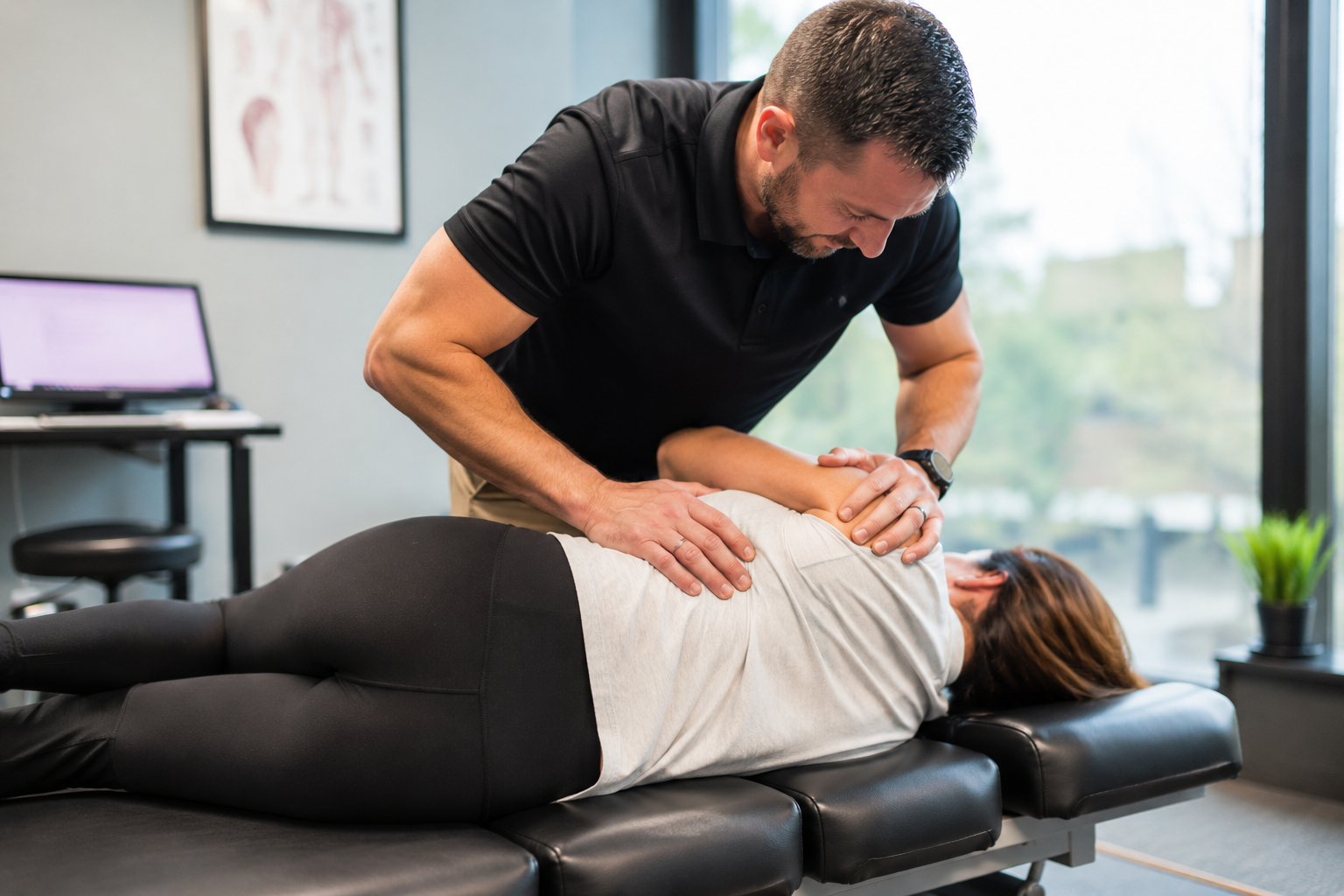
If you’re new to chiropractic care, you may wonder what happens during an adjustment. A chiropractor uses controlled force to move specific joints, often in the spine, to support movement and function.
At Broadview Health Center, chiropractic care combines spinal adjustments, therapeutic exercises, and personalized care to support pain relief, mobility, and function.
A chiropractic adjustment is a controlled technique used to manipulate a joint, often involving the spine.
During an adjustment, a chiropractor may use their hands or a specialized instrument to apply specific pressure to a joint. The movement may be quick and precise or gentler, depending on the technique and the patient’s needs.
Cleveland Clinic explains that chiropractic adjustments involve manipulating joints using the hands or specialized instruments. Treatment may also include exercises, stretches, or other techniques.
An adjustment is not simply about making your back or neck “crack.” The goal is to address restricted joint movement and support function.
Your first chiropractic appointment generally begins with an evaluation.
The chiropractor will ask about your symptoms, health history, previous injuries, and goals. You may be asked:
Where do you experience pain or discomfort?
When did your symptoms begin?
Did an injury cause the problem?
What activities make your symptoms better or worse?
Have you experienced similar symptoms before?
Have you received treatment for the problem?
How does the problem affect your daily activities?
Do you experience numbness, tingling, or weakness?
A physical examination may then evaluate posture, range of motion, movement, and other physical factors.
Mayo Clinic notes that an initial chiropractic visit typically includes a health-history discussion and physical examination. Additional testing, such as X-rays, may sometimes be recommended when appropriate.
Similar symptoms can have different causes. Two people may both have lower back pain, for example, but require different approaches depending on the underlying problem.
A proper evaluation helps determine whether chiropractic care may be appropriate and which techniques may be suitable.
Broadview Health Center emphasizes personalized care. The clinic explains that patients receive an assessment before a treatment plan is developed around their individual needs and goals.
If an adjustment is appropriate, the chiropractor will position you on a chiropractic table.
Depending on the area being treated, you may lie face down, on your side, or in another position. The chiropractor will carefully position the area being treated and apply controlled force to a specific joint.
The technique may involve a quick, precise movement or a gentler form of mobilization.
During certain adjustments, you may hear a popping or cracking sound. This can happen when gases within a joint are released as the joint moves. Cleveland Clinic explains that this sound is related to changes within the joint during manipulation.
Not every adjustment produces a sound. A quiet adjustment can still be completely normal.
Many people worry that an adjustment will be painful.
A chiropractic adjustment is generally intended to be controlled rather than painful. You may feel pressure, stretching, or movement as the joint is adjusted.
Some people experience mild soreness afterward. Mayo Clinic notes that minor side effects may include headaches, soreness in treated areas, or tiredness for a short period following treatment.
If something feels painful or uncomfortable during treatment, tell your chiropractor immediately.
The popping sound is one of the most recognizable parts of chiropractic care, but it is not the goal of an adjustment.
When a joint moves, changes in pressure can cause gases within the joint to be released, creating a popping sound.
You may hear one or several pops, or you may hear nothing at all. Both can be normal.
The purpose of the adjustment is the controlled movement of the joint—not producing a sound.
People seek chiropractic care for a variety of musculoskeletal concerns.
Common reasons include:
Neck pain
Low back pain
Headaches
Disc injuries
Sciatica
Arthritis
Stiffness
Related musculoskeletal conditions
Mayo Clinic identifies low back pain, neck pain, and headaches among the common reasons people seek chiropractic adjustments.
At Broadview Health Center, chiropractic and rehabilitation services address concerns including neck pain, low back pain, headaches, disc injuries, sciatica, arthritis, and related conditions.
Whether chiropractic care is appropriate depends on your individual condition and evaluation.
After an adjustment, your chiropractor may reassess your movement or symptoms.
Depending on your condition, your treatment plan may also include therapeutic exercises, stretching, mobility work, or other rehabilitation strategies.
This can be important because improving joint movement may be only one part of addressing pain or limited mobility.
Broadview Health Center combines chiropractic care with therapeutic exercises and rehabilitation to help patients restore function and improve mobility.
Chiropractic adjustments and rehabilitation can complement one another.
An adjustment may address joint movement, while rehabilitation can focus on strength, flexibility, stability, and movement patterns.
Depending on your needs, rehabilitation may focus on:
Strength
Flexibility
Range of motion
Balance
Stability
Functional movement
Posture
Activity tolerance
Broadview Health Center’s chiropractic and rehabilitation services combine spinal adjustments with therapeutic exercises to help patients restore function and remain active.
There is no single treatment schedule that applies to everyone.
The frequency of care can depend on:
Your condition
The severity of your symptoms
How long you have experienced the problem
Your overall health
Your response to treatment
Your activity level
Your individual goals
Some people may require a limited course of care, while others may need additional treatment depending on their condition.
Your chiropractor should explain the recommended plan and monitor your progress.
Mayo Clinic notes that some people may need several sessions for certain conditions, while not everyone responds to chiropractic adjustments in the same way.
For many people, chiropractic adjustments performed by a trained professional are considered safe. However, like other healthcare treatments, chiropractic care carries potential risks.
Temporary soreness or achiness can occur following treatment, while serious complications are uncommon. Serious complications are rare but can occur. Certain people may not be appropriate candidates for chiropractic adjustments, particularly in the presence of certain neurological or structural conditions.
Tell your chiropractor about your medical history, medications, previous injuries, surgeries, and unusual symptoms before treatment.
Communication is an important part of safe care.
Tell your chiropractor if you have:
Recent injuries
Severe or worsening pain
Numbness or tingling
Weakness
Previous spinal surgery
Significant medical conditions
New or unusual symptoms
Changes in your ability to move
Concerns about a particular treatment technique
Certain symptoms may require additional medical evaluation before chiropractic treatment.
If you are nervous about an adjustment, ask your chiropractor to explain the technique before treatment begins.
One common misconception is that chiropractic care is simply about making the spine pop.
In reality, chiropractic care can involve evaluation, adjustments, therapeutic exercises, rehabilitation, and movement recommendations.
Chiropractors may use adjustments along with exercises, stretches, and other techniques as part of care.
Broadview Health Center offers a broader wellness approach that includes:
Chiropractic & Rehabilitation
Neuropathy Care
Spinal Decompression
Healthy One Weight Loss
Infrared Body Contouring
Nutritional Support
If you have never visited a chiropractor before, your first appointment may include:
Health history: Discuss your symptoms, medical history, injuries, and goals.
Physical examination: Your chiropractor may evaluate posture, movement, and range of motion.
Additional testing: Imaging or other testing may be recommended when appropriate.
Treatment planning: Your chiropractor will explain the recommended approach.
Chiropractic treatment: If appropriate, an adjustment or another technique may be performed.
Follow-up recommendations: You may receive exercises, stretches, or activity recommendations.
MedlinePlus explains that an initial chiropractic visit commonly includes discussion of health history and treatment goals, an examination, and development of a treatment plan.
Broadview Health Center focuses on personalized, non-invasive care designed to reduce pain and improve mobility.
The clinic explains that its chiropractic care uses spinal adjustments and therapeutic exercises to restore function and help patients stay active.
The clinic’s approach is centered on understanding the individual patient, evaluating their condition, and developing a treatment plan based on their needs and goals.
1. What is a chiropractic adjustment?
A chiropractic adjustment is a controlled technique in which a chiropractor manipulates a joint, often in the spine, to improve movement and function.
2. Does a chiropractic adjustment hurt?
Adjustments are generally intended to be controlled rather than painful. You may feel pressure, stretching, or movement. Mild soreness can occur afterward.
3. Why does my back crack during an adjustment?
A popping sound may occur when gases within a joint are released as the joint moves. Not every adjustment produces a sound.
4. Does every adjustment involve cracking?
No. Chiropractors use different techniques, and some adjustments do not produce a popping sound.
5. What happens during my first chiropractic appointment?
Your chiropractor will typically discuss your health history and symptoms, perform an examination, and determine whether chiropractic care is appropriate. Additional testing may sometimes be recommended.
6. How many adjustments will I need?
There is no standard number. Your treatment schedule depends on your condition, goals, and response to care.
7. Can chiropractic care help with back pain?
Chiropractic adjustments may help certain types of low back pain. Spinal manipulation can be beneficial for some people with lower back pain.
8. Can chiropractic care help with neck pain?
Neck pain is a common reason people seek chiropractic care. Whether an adjustment is appropriate depends on the cause of your symptoms and your individual evaluation.
9. What if I experience numbness or weakness?
Tell your chiropractor before treatment. Certain neurological symptoms may require additional medical evaluation.
10. Can chiropractic care be combined with rehabilitation?
Yes. Broadview Health Center combines chiropractic adjustments with therapeutic exercises and rehabilitation when appropriate.
11. Does Broadview Health Center offer services besides chiropractic care?
Yes. Services include Chiropractic & Rehabilitation, Neuropathy Care, Spinal Decompression, Healthy One Weight Loss, Infrared Body Contouring, and Nutritional Support.
A chiropractic adjustment is more than simply “cracking” your back.
The process begins with an evaluation of your symptoms, health history, movement, and goals. If chiropractic care is appropriate, a chiropractor uses a controlled technique to manipulate a specific joint. You may feel pressure or movement, and you may hear a popping sound, but the sound itself is not the purpose of treatment.
Chiropractic care can also include therapeutic exercises, rehabilitation, mobility work, and other supportive strategies.
Broadview Health Center provides personalized chiropractic and rehabilitation care focused on pain relief, mobility, and function.
If back pain, neck pain, stiffness, headaches, sciatica, or another musculoskeletal concern is affecting your daily life, learning about your treatment options can be a useful first step.
If pain or limited mobility is keeping you from doing the activities you enjoy, contact Broadview Health Center to learn more about personalized chiropractic and rehabilitation care.
Address: 1100 West Royalton Road Suite H Broadview Heights, OH 44147
Phone: (440) 230-1113
Website: broadviewhealthcenter.com