
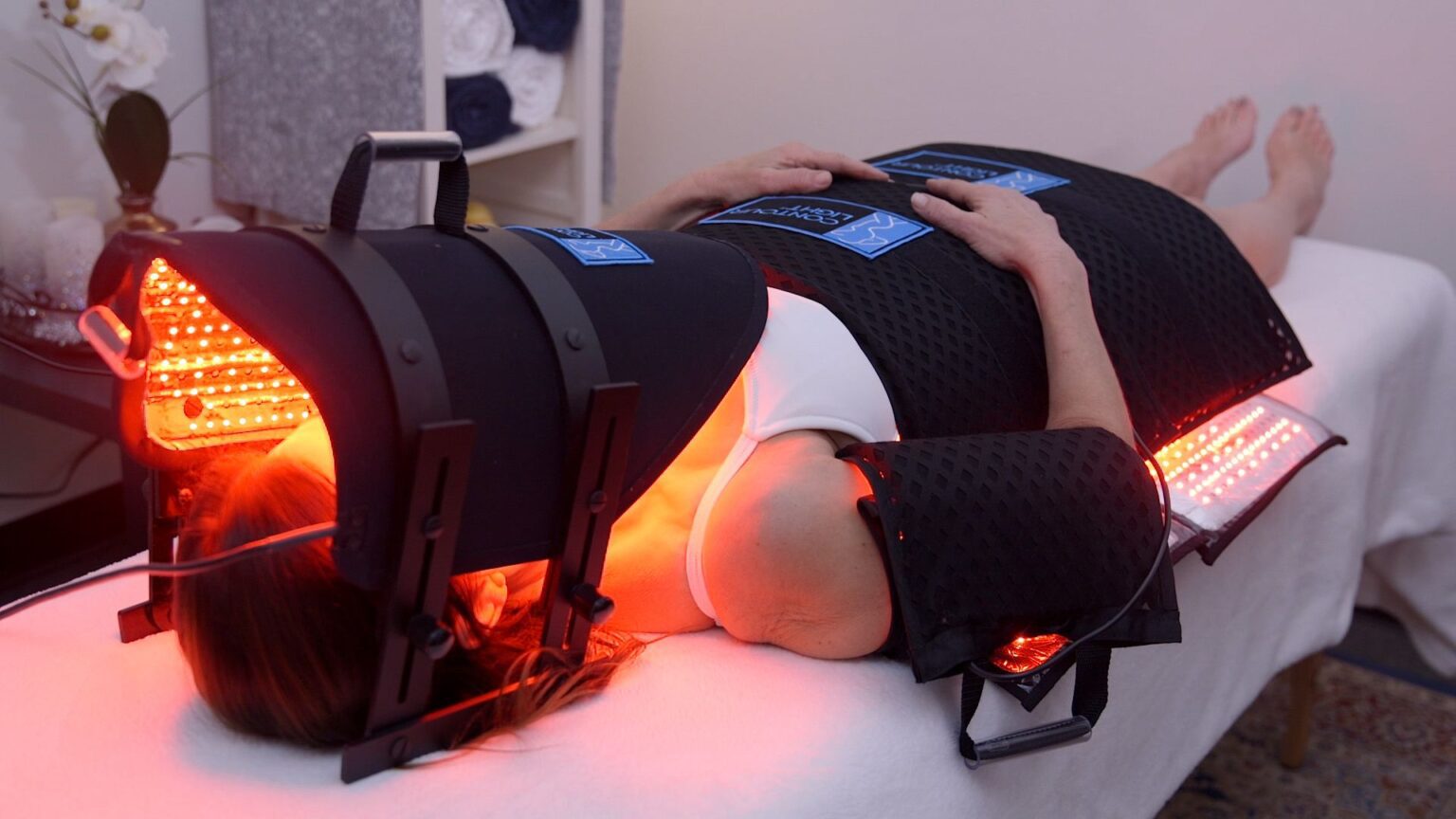
Losing weight can change your overall body size and health, but it does not always change every area of the body in the way you expect. Some people continue to notice small pockets of fat around the abdomen, waist, hips, thighs, or other areas even after improving their eating habits and becoming more physically active. These areas are sometimes described as stubborn fat.
This is where non-invasive body-contouring treatments may become an option worth discussing.
Red light body contouring uses low-level light directed toward targeted areas of the body. Research has investigated whether certain low-level light therapy devices can temporarily reduce circumference in treated areas. However, it is important to understand that body contouring is not the same thing as overall weight loss.
The U.S. Food and Drug Administration (FDA) explains that non-invasive body contouring is intended to change the shape or circumference of specific areas and does not treat obesity or provide the health benefits associated with weight loss.
At Broadview Health Center, red light body contouring can be considered as part of a broader approach to wellness and weight-management goals.
“Stubborn fat” is a common term for areas of localized body fat that seem resistant to changes in diet and exercise.
Your body does not necessarily lose fat evenly. Genetics, age, hormones, body composition, activity levels, and other individual factors can influence where fat is stored and where it decreases first.
For some people, the abdomen may be one of the last areas to change. Others may notice more persistent fullness around the hips, thighs, arms, or waist.
This does not necessarily mean that your weight-management efforts are failing.
Body shape and body composition are different from body weight. Two people with the same weight may have very different body shapes and fat distributions.
Low-level light therapy, sometimes called photobiomodulation, uses very low levels of visible light. Unlike some other body-contouring technologies, these devices do not rely on significant heating or cooling of the tissue.
According to the FDA, low-level light therapy devices may temporarily reduce circumference in treated areas. The proposed mechanism involves photobiomodulation, in which low levels of light may influence cellular activity without significantly changing tissue temperature.
Researchers have studied whether this type of light exposure can affect fat cells and contribute to changes in measurements.
However, the science is still developing, and different devices may use different wavelengths, treatment schedules, and protocols.
That means results from one study or device should not automatically be assumed to apply to every red light treatment.
The short answer is: it may help reduce circumference in some treated areas, but it should not be considered a guaranteed way to eliminate stubborn fat.
Several clinical studies have reported reductions in circumference following low-level laser treatments.
For example, a randomized, controlled study published in Lasers in Surgery and Medicine evaluated low-level laser therapy applied to the waist, hips, and thighs. The treatment group experienced greater overall circumference reduction than the control group during the study period. PubMed
Another randomized, double-blind study examined low-level laser therapy for the hips, waist, and upper abdomen. The researchers reported reductions in combined measurements after four weeks of treatment.
These findings suggest that certain low-level light therapies may support temporary circumference reduction in targeted areas.
However, not every study has produced the same results. One study evaluating a multiple-diode laser system found little clinical difference between treatment and baseline measurements.
This variation is one reason realistic expectations are important.
One of the biggest misconceptions about body contouring is that it is simply another form of weight loss.
It is not.
The FDA specifically states that non-invasive body contouring does not treat obesity, does not result in weight loss, and does not provide the health benefits associated with weight loss.
Instead, body contouring focuses on changing the appearance or circumference of specific areas.
For example, someone may be working toward an overall weight-management goal while also wanting to address a particular area that remains noticeable.
The two goals can exist together, but they should not be confused.
Depending on the specific technology and device, body-contouring treatments may target areas such as:
Abdomen
Waist
Hips
Thighs
Arms
The appropriate treatment area depends on the device being used and its intended application.
Not every body-contouring device is designed or cleared for every area, so patients should discuss the specific technology and treatment goals with their healthcare provider.
Research into low-level light therapy for body contouring has produced some encouraging findings, but it is not conclusive evidence of guaranteed fat reduction.
A study involving 67 participants found that low-level laser therapy was associated with reductions in circumference across the waist, hips, and thighs compared with a sham treatment. The researchers concluded that the therapy could reduce circumference measurements in specifically treated regions.
Another study involving individuals with higher BMI reported reductions in combined hip, waist, and upper-abdominal measurements following low-level laser therapy.
At the same time, other research has found more limited effects.
The Cleveland Clinic notes that research surrounding red light therapy is still developing and that many proposed uses require additional high-quality research.
The takeaway is simple: there is evidence worth discussing, but there is not enough evidence to promise that red light body contouring will eliminate stubborn fat for everyone.
A weight-loss journey generally involves more than one treatment or habit.
Healthy nutrition, physical activity, sleep, stress management, and consistent lifestyle changes can all support long-term weight management.
Red light body contouring may be considered as an additional option for targeted areas.
For example, your broader plan may include:
Balanced nutrition
Regular physical activity
Appropriate strength training
Adequate sleep
Stress management
Hydration
Healthy daily routines
Professional weight-management guidance
Targeted body-contouring treatments when appropriate
This approach keeps the focus on overall health while recognizing that some people may also have cosmetic or body-shaping goals.
No two people have exactly the same body composition or response to treatment.
Several factors may influence the outcome of body-contouring treatments, including:
Genetics
Age
Body composition
Lifestyle habits
Treatment area
Treatment protocol
Number of sessions
Individual response
The FDA also cautions that non-invasive body-contouring procedures may not produce the desired effect, results may be temporary, and some individuals may require more than one treatment.
This makes it important to approach treatment with realistic expectations.
Low-level light body contouring is generally non-invasive. Depending on the device, light-emitting panels or applicators may be positioned near the targeted body area.
Unlike surgical procedures, there are no surgical incisions.
Because different devices operate differently, the exact treatment experience can vary.
The FDA notes that low-level light therapy uses very low energy levels and generally has few complications, although possible issues can include sensitivity, itching, pain, burns, pigmentation changes, or nodules.
Eye protection may also be necessary for certain light-based procedures.
Your provider should explain the specific device, treatment process, possible benefits, limitations, and risks before treatment.
No. Although low-level light therapy generally uses low energy levels, certain people may not be appropriate candidates.
The FDA states that photobiomodulation may not be recommended for people with certain photosensitivity disorders, those who are pregnant or planning pregnancy, people with certain active implants, individuals with skin cancer or a history of cancer at the treatment site, people taking photosensitizing medications, or those with an active infection, wound, or lesion in the treatment area.
Always disclose your medications, medical conditions, implants, and relevant health history before receiving treatment.
A treatment that is appropriate for one person may not be appropriate for another.
A personalized evaluation can help determine whether body contouring fits your goals and whether there are factors that should be considered before treatment.
At Broadview Health Center, the goal is to provide individualized support rather than treating every patient according to the same plan.
This can be especially important when body contouring is being considered alongside weight-management strategies.
Instead of viewing red light body contouring as a shortcut, it can be considered one possible tool within a larger plan.
Myth 1: Stubborn fat means your diet and exercise are not working.
Not necessarily. Fat distribution varies between individuals, and some areas may change more slowly than others.
Myth 2: Red light body contouring guarantees fat loss.
It does not. Research suggests that certain low-level light therapies may reduce circumference in treated areas, but individual results vary.
Myth 3: Body contouring is the same as weight loss.
No. Body contouring focuses on reshaping or changing measurements in specific areas. It does not treat obesity or replace a healthy weight-management strategy.
Myth 4: More treatments always mean better results.
Not necessarily. Treatment frequency and duration should be based on the specific device and professional recommendations.
Myth 5: Everyone is automatically a candidate.
No. Certain health conditions, medications, implants, pregnancy, and skin concerns may affect eligibility.
Can red light body contouring get rid of stubborn belly fat?
It may help reduce circumference in some treated areas, including the waist or abdomen, depending on the specific technology. However, it should not be presented as a guaranteed way to eliminate belly fat.
Is red light body contouring a weight-loss treatment?
No. Non-invasive body contouring is intended to change the shape or circumference of targeted areas rather than produce overall weight loss.
Can I use red light body contouring while losing weight?
It may be possible for some people to incorporate body contouring into a broader weight-management plan. A professional evaluation can help determine whether it is appropriate.
How many treatments are needed?
There is no single treatment schedule that applies to every device or individual. The recommended number of sessions depends on the specific technology and treatment plan.
Are results permanent?
Results may not be permanent. The FDA notes that effects from non-invasive body contouring may be temporary.
Does red light therapy replace exercise?
No. Regular physical activity remains an important component of overall health and sustainable weight management.
Does red light body contouring hurt?
Low-level light treatments are generally non-invasive, but individual experiences can vary. Your provider should explain what sensations you may experience during treatment.
Can everyone receive this treatment?
No. Certain medical conditions and circumstances may make treatment inappropriate. A health history and professional evaluation are important.
Will I lose pounds from body contouring?
Body contouring should not be promoted as a method for guaranteed weight loss. Its primary purpose is targeted body shaping or circumference reduction.
Where can I learn more about my options?
You can visit the Broadview Health Center website or review the weight-loss services available.
Stubborn areas of body fat can be frustrating, especially when you have already made positive changes to your nutrition and activity habits.
Red light body contouring may offer an option for people interested in addressing specific areas of the body without surgery. Research has found that certain low-level light therapies can produce reductions in circumference in treated areas, although results vary and not all studies have shown the same degree of benefit. (PubMed)
The most important distinction is that body contouring is not the same as weight loss. It should not replace healthy eating, regular movement, or appropriate weight-management care.
Instead, it may serve as a complementary option for targeted body-contouring goals.
At Broadview Health Center, personalized guidance can help you understand whether red light body contouring may fit into your individual wellness and weight-management journey.
If you are interested in addressing stubborn areas while continuing to work toward your health and weight-management goals, professional guidance can help you understand your options.
Visit the Broadview Health Center website to learn more, explore the weight-loss services, or read the Broadview Health Center blog for additional educational information.
If you are looking for personalized support, contact us or schedule an appointment to explore options that fit your needs.
Broadview Health Center
Address: 1100 West Royalton Road Suite H, Broadview Heights, OH 44147
Phone: (440) 230-1113
Website: https://broadviewhealthcenter.com/