
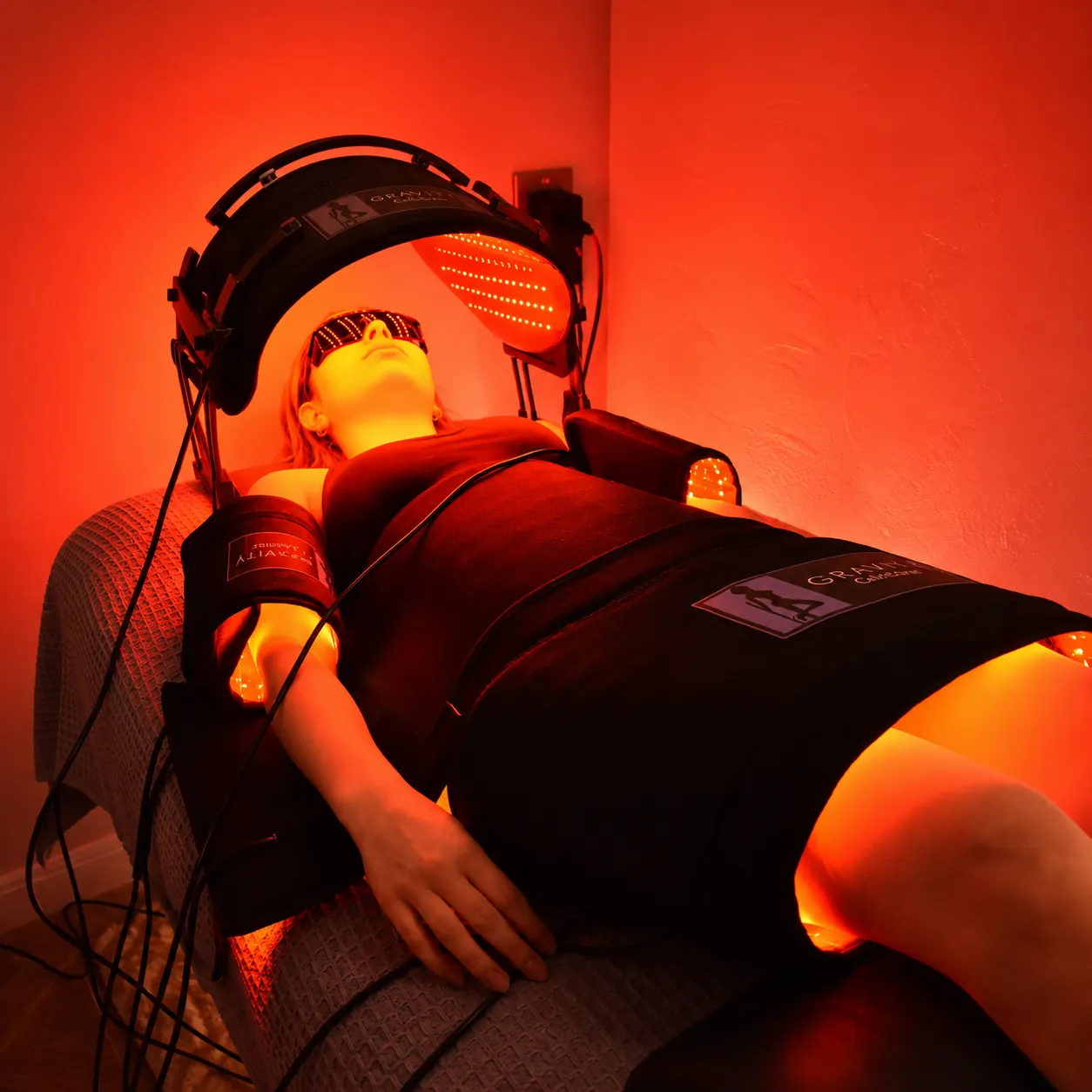
Weight loss is often about more than a number on the scale. As your body changes, you may also become interested in improving your overall shape, addressing specific areas, and supporting the appearance of your body as you work toward your health goals.
Red light body contouring is one non-invasive approach that may be considered as part of a broader body-contouring and wellness plan. Unlike traditional weight-loss strategies, body contouring is generally focused on specific areas of the body rather than producing overall weight loss.
The U.S. Food and Drug Administration (FDA) explains that low-level light therapy, also called photobiomodulation, uses very low doses of visible light and does not heat the skin or fat. Certain devices may temporarily reduce circumference in treated areas.
This distinction is important. Red light body contouring should not be viewed as a replacement for healthy eating, physical activity, or a comprehensive weight-management program. Instead, it may complement other efforts by focusing on body contouring in specific areas.
At Broadview Health Center, red light body contouring can be considered within a personalized approach to wellness and weight management.
Red light body contouring uses low levels of red or near-infrared light directed toward targeted areas of the body. Unlike procedures that use heat or cold to affect tissue, low-level light therapy uses light energy without significantly heating the treatment area.
The FDA describes low-level light therapy devices used for body contouring as non-invasive technologies that may temporarily reduce circumference in treated areas.
The technology is sometimes referred to as:
Red light therapy
Low-level light therapy
Low-level laser therapy
Photobiomodulation
Light-based body contouring
Different technologies and devices can have different intended uses, so it is important to understand what a specific treatment is designed to do.
The exact biological mechanisms behind low-level light therapy continue to be studied.
The FDA notes that these treatments are thought to work through photobiomodulation, meaning light may influence cellular activity without producing significant changes in temperature.
Some research has investigated whether low-level light therapy may affect fat cells and contribute to temporary reductions in circumference in treated areas.
Clinical research has reported reductions in measurements in areas such as the waist, hips, and thighs following low-level laser treatments. However, studies vary in their design, treatment protocols, and outcomes. (PubMed)
Because of this, it is more accurate to say that red light body contouring may help improve measurements or the appearance of targeted areas for some people, rather than promising a specific amount of fat loss.
One of the most important things to understand is the difference between weight loss and body contouring.
Weight loss involves reducing overall body weight and can be influenced by nutrition, physical activity, sleep, medications, medical conditions, metabolism, and other factors.
Body contouring, on the other hand, focuses on the shape or circumference of specific areas.
The Cleveland Clinic explains that body contouring generally focuses on reshaping areas of the body rather than producing weight loss.
This means you should not expect red light body contouring to replace a weight-management plan.
Instead, it may be considered an additional option for people who are already working toward healthier lifestyle habits and want to address specific areas.
A comprehensive weight-management journey can include several different components.
These may include:
Nutrition
Physical activity
Healthy sleep habits
Stress management
Behavioral changes
Medical guidance when appropriate
Regular progress monitoring
Body-contouring options
Red light body contouring may fit into this picture as a supportive body-contouring treatment, rather than the primary method of losing weight.
For example, someone may be working on healthier eating habits and regular exercise while also exploring non-invasive options for targeted body areas.
The purpose is to create a plan that addresses both overall wellness and individual goals.
Even when someone is making healthy lifestyle changes, certain areas of the body may remain a source of concern.
People may notice differences around areas such as the:
Abdomen
Waist
Hips
Thighs
Arms
Body shape is influenced by genetics, age, body composition, activity level, and many other factors. It is not always possible to predict exactly where the body will change first during weight loss.
A targeted body-contouring approach may therefore be appealing to individuals who want to focus on specific areas.
However, results can vary, and body contouring should be approached with realistic expectations.
Research on low-level light therapy for body contouring has produced some promising findings, but the evidence is not strong enough to support broad claims about weight loss.
One randomized controlled study published in Lasers in Surgery and Medicine found reductions in circumference at treated sites following low-level laser therapy.
Another clinical study evaluated low-level laser therapy for reducing hip, waist, and upper-abdominal circumference and reported reductions in certain participants.
At the same time, the Cleveland Clinic notes that research on red light therapy remains ongoing and that more high-quality studies are needed for many of its proposed uses.
This is why responsible messaging matters. Red light therapy may have potential for certain applications, but it should not be promoted as a guaranteed weight-loss treatment.
A body-contouring treatment works best within the context of a broader healthy lifestyle.
Nutrition remains an important part of weight management. Building meals around nutrient-dense foods, appropriate portions, protein, vegetables, fruits, whole grains, and healthy fats can support overall wellness.
Physical activity is also important. Walking, strength training, recreational activities, and other appropriate forms of movement can support fitness and help maintain muscle while working toward weight-management goals.
Other habits can also contribute to a healthier lifestyle:
Drinking enough water
Getting adequate sleep
Managing stress
Limiting excessive sugary beverages
Planning meals
Maintaining consistent physical activity
Monitoring progress over time
Red light body contouring should complement these habits rather than replace them.
Red light body-contouring treatments are generally non-invasive. Depending on the device and treatment protocol, a light-based device may be positioned near or against the targeted area.
The treatment does not involve surgical incisions.
The FDA notes that low-level light therapy procedures use very low levels of light and generally have few complications because the energy level is low. However, possible issues can include sensitivity at the treatment site, itching, pain, burns, or changes in skin pigmentation
Your provider should explain the specific treatment process, what you may experience, and what precautions apply to the technology being used.
Whether red light body contouring is appropriate depends on your health, goals, and the specific device or treatment being considered.
A professional evaluation may be useful before beginning treatment.
The FDA lists several situations in which photobiomodulation may not be recommended, including certain photosensitivity disorders, pregnancy or plans for pregnancy, active implants such as pacemakers or implantable cardioverter-defibrillators, skin cancer or a history of cancer at the treatment site, use of photosensitizing medications, and active infections, wounds, or lesions in the treatment area.
Because individual circumstances differ, it is important to discuss relevant medical conditions, medications, and concerns with a qualified healthcare professional.
There is no single weight-management or body-contouring approach that works for everyone.
Your goals may be different from another person’s goals. Your medical history, lifestyle, current weight, activity level, and previous experiences can all influence which strategies may be appropriate.
At Broadview Health Center, personalized wellness and weight-management support can help you explore options that fit your individual circumstances.
Red light body contouring may be considered alongside other approaches rather than as a standalone solution.
A personalized approach also allows expectations to remain realistic. Instead of focusing only on a specific number on the scale or measurement, progress can be considered in terms of overall habits, wellness, physical activity, body composition, and individual goals.
Myth 1: Red light body contouring is a replacement for dieting and exercise.
It is not. Body contouring and weight management are different goals. Healthy nutrition and physical activity remain important parts of a sustainable weight-management approach.
Myth 2: Red light therapy guarantees fat loss.
There are studies showing potential reductions in circumference with certain low-level light devices, but results vary. The FDA describes some devices as capable of temporarily reducing circumference in treated areas, not as guaranteed weight-loss treatments.
Myth 3: More treatment automatically means better results.
Not necessarily. Treatment protocols depend on the device, treatment area, and individual circumstances. Following professional recommendations is important.
Myth 4: Everyone is automatically a candidate.
No. Certain medical conditions, medications, implants, pregnancy, photosensitivity, and skin conditions may affect whether the treatment is appropriate.
1. Does red light body contouring cause weight loss?
Red light body contouring is primarily intended to address targeted areas and circumference rather than serve as a primary weight-loss treatment. It may complement a broader weight-management plan.
2. Can red light therapy reduce belly fat?
Certain low-level light devices have been studied for circumference reduction around the waist and abdomen. However, individual results vary, and treatment should not be presented as a guaranteed method for reducing belly fat.
3. Is red light body contouring invasive?
Low-level light body-contouring procedures are generally non-invasive and do not require surgical incisions. (U.S. Food and Drug Administration)
4. Does red light body contouring replace exercise?
No. Regular physical activity remains an important part of overall health and weight management.
5. How long does it take to see results?
There is no universal timeline. Results can vary depending on the device, treatment protocol, individual characteristics, and other lifestyle factors.
6. Is red light therapy safe?
Low-level light therapy generally has few complications, but side effects and risks are possible. Your provider can determine whether treatment is appropriate for you.
7. Can everyone receive red light body contouring?
No. Certain medical conditions, medications, implants, pregnancy, and skin concerns may affect eligibility.
8. Can I combine body contouring with a weight-loss program?
Potentially. Body contouring may complement a broader weight-management plan, but it should not replace nutrition, physical activity, or appropriate medical guidance.
9. Will everyone get the same results?
No. Individual outcomes vary. Factors such as body composition, lifestyle, treatment protocol, and individual response can influence results.
10. Where can I learn more?
You can visit the Broadview Health Center website to learn more about available wellness and weight-management options.
Red light body contouring can be an interesting option for people who want to address specific areas while continuing to work toward broader health and weight-management goals.
The key is understanding what the treatment can and cannot do.
Low-level light therapy may temporarily reduce circumference in treated areas, and research has reported promising findings for certain body-contouring applications. However, it should not be confused with traditional weight loss or presented as a replacement for nutrition and physical activity. (U.S. Food and Drug Administration)
A balanced approach may include healthy eating, regular movement, adequate sleep, stress management, and professional guidance. Red light body contouring may serve as an additional option within that larger plan.
Most importantly, treatment goals should be realistic and individualized. There are no guaranteed results, and what works for one person may not work the same way for another.
If you are considering red light body contouring as part of your weight-management journey, personalized guidance may help you determine whether it fits your goals and circumstances.
Visit the Broadview Health Center website to learn more, or explore the weight-loss services available.
You can also visit the Broadview Health Center blog for additional educational information.
If you are looking for personalized support with your health and weight-management goals, contact us or schedule an appointment to explore options that fit your needs.
Broadview Health Center
Address: 1100 West Royalton Road Suite H, Broadview Heights, OH 44147
Phone: (440) 230-1113
Website: https://broadviewhealthcenter.com/