
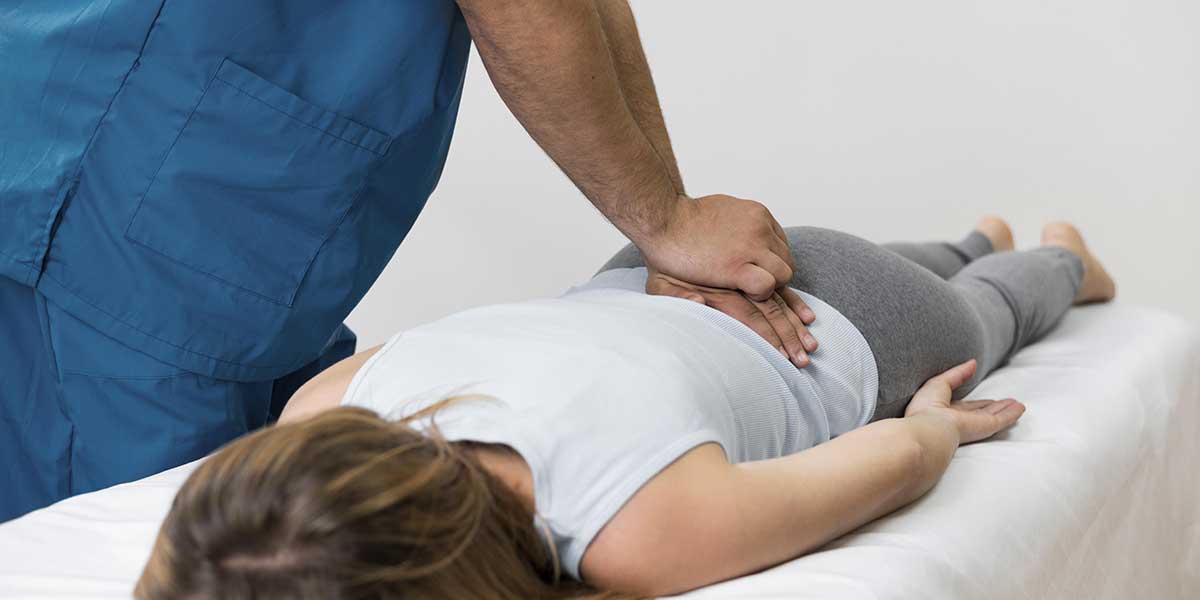
Sciatica can make everyday activities difficult. Sitting at work, standing, walking, bending, or getting out of bed may cause sharp, burning, or shooting pain. For some people, symptoms travel from the lower back through the buttock and down the leg. Numbness, tingling, or weakness may also occur.
While pain relief is important, understanding why the sciatic nerve is irritated or compressed is equally important. Sciatica is commonly associated with conditions affecting the lower spine, including herniated or bulging discs, degenerative disc changes, spinal stenosis, and bone spurs.
According to the Mayo Clinic, sciatica occurs when the nerve roots that contribute to the sciatic nerve become compressed or irritated. Symptoms can include pain, numbness, tingling, and weakness in the affected leg.
This is where spinal decompression may have a role. Rather than simply focusing on temporary symptom relief, spinal decompression is designed to gently reduce mechanical pressure around targeted spinal structures. At Broadview Health Center, spinal decompression is available as a non-surgical approach for certain conditions involving the discs, nerves, and lower back.
Understanding What Causes Sciatica
The sciatic nerve is formed by nerve roots originating in the lower spine. It travels through the buttocks and down each leg. When one of these nerve roots becomes irritated or compressed, symptoms can develop along the nerve’s pathway.
Common causes can include:
-
Herniated or bulging discs
-
Degenerative disc disease
-
Spinal stenosis
-
Bone spurs
-
Certain spinal injuries
-
Other conditions that irritate or compress spinal nerve roots
The Cleveland Clinic explains that sciatica can occur when something pinches, presses on, or irritates the sciatic nerve or one of its nerve roots.
This distinction matters because the location of pain may not be the location of the underlying problem. Someone may feel pain primarily in the calf or foot even though the contributing issue is located in the lower back.
What Does “Root Cause” Mean With Sciatica?
The term “root cause” should be used carefully because sciatica can have different causes. No single treatment works for every patient.
One person may have a herniated disc, while another may have spinal stenosis or degenerative changes. An appropriate evaluation helps determine what may be contributing to the symptoms.
When sciatica is related to spinal nerve irritation, contributing factors may include:
-
Reduced space around a nerve
-
A bulging or herniated disc
-
Degenerative changes affecting spinal structures
-
Inflammation around irritated tissues
-
Changes in spinal mechanics
At Broadview Health Center, care begins with an evaluation to determine whether spinal decompression is appropriate for the individual’s condition.
You can learn more about the clinic’s approach through the Broadview Health Center.
What Is Spinal Decompression?
Spinal decompression is a non-surgical therapy that uses controlled mechanical traction to gently stretch the spine.
At Broadview Health Center, treatment uses a specialized decompression table. Treatment can be adjusted according to the patient’s condition and the area being addressed.
During treatment:
-
You lie on a motorized table
-
A harness is placed around your hips or torso
-
The machine applies gentle pulling forces to the spine
-
The spine is stretched and relaxed in cycles
The purpose of this controlled process is to change the loading and pressure experienced by targeted spinal structures.
Broadview Health Center describes spinal decompression as a therapy intended to reduce pressure on spinal discs and nerves and support circulation to affected tissues.
How Spinal Decompression May Help Sciatica
Spinal decompression may be relevant when sciatic symptoms are associated with disc-related problems.
The basic concept is straightforward: if a spinal disc or another structure is contributing to nerve compression, carefully controlled decompression may help reduce some of that mechanical pressure.
The treatment may:
-
Create negative pressure within the targeted spinal disc
-
Encourage displaced disc material toward the center of the disc
-
Reduce mechanical pressure around affected nerve structures
-
Encourage movement of oxygen, water, and nutrients into disc tissues
-
Support the body’s natural healing processes
These effects should not be considered a guarantee that every herniated disc will respond or that every case of sciatica will improve. Individual results depend on the underlying condition, severity, overall health, and other factors.
The Connection Between Disc Problems and Sciatica
Intervertebral discs sit between the vertebrae and help absorb forces placed on the spine. When a disc becomes damaged, it can bulge or herniate.
A herniated disc can place pressure on a nearby nerve root. When the affected nerve contributes to the sciatic nerve, symptoms may travel down the leg.
The Mayo Clinic explains that a herniated disc can occur when the soft center of a disc pushes through a tear in its tougher exterior. If the herniated material presses on a nerve, it can cause symptoms.
This helps explain why treating only the area where pain is felt may not address the entire problem.
Spinal Decompression and Degenerative Disc Changes
Age-related changes can affect spinal discs. Over time, discs may lose some of their water content and become less resilient. Changes in disc height and surrounding spinal structures may affect the spaces through which nerves travel.
When these changes contribute to nerve irritation, treatment may need to address more than pain alone.
Spinal decompression is designed to provide controlled unloading of targeted spinal segments. Broadview Health Center offers spinal decompression for certain patients with degenerative disc disease, herniated or bulging discs, sciatica, and other spinal conditions.
Explore the clinic’s services to learn more about available treatment options.
Spinal Decompression and Spinal Stenosis
Spinal stenosis occurs when spaces within the spine become narrower and place pressure on spinal nerves or other structures.
Because spinal stenosis can have different causes and levels of severity, treatment needs to be individualized.
Broadview Health Center identifies spinal stenosis as one condition for which spinal decompression may be considered following an appropriate evaluation.
However, not everyone with spinal stenosis is necessarily an appropriate candidate. The underlying anatomy and severity of the condition must be considered.
Why Personalized Care Matters
Sciatica is not the same for everyone.
Two people may both experience pain traveling down the leg but have very different underlying conditions. One person may have a disc herniation, while another may have degenerative changes or spinal stenosis.
This is why personalized evaluation matters.
Broadview Health Center may use an examination, review of previous imaging, and, when appropriate, onsite X-rays to determine whether spinal decompression is suitable.
The clinic’s services include:
-
Chiropractic & Rehabilitation
-
Neuropathy Care
-
Spinal Decompression
-
Healthy One Weight Loss
-
Infrared Body Contouring
-
Nutritional Support
You can explore Broadview Health Center’s services page for more information.
Spinal Decompression Is Not for Everyone
Although spinal decompression may be appropriate for certain patients, it is not universally suitable.
Broadview Health Center notes that non-surgical spinal decompression may not be appropriate for:
-
People with severe osteoporosis or spinal fractures.
-
Those with tumors, infections, or other serious spine conditions.
-
Pregnant individuals.
-
Those with advanced arthritis or spinal instability.
A professional evaluation is therefore important before beginning treatment.
Patients should discuss relevant health conditions, medications, previous injuries, surgeries, and imaging findings with their healthcare provider.
When Sciatica Requires Prompt Medical Attention
Many cases of sciatica can be managed conservatively, but certain symptoms require prompt medical evaluation.
The Mayo Clinic recommends immediate medical attention for symptoms such as sudden numbness or muscle weakness in a leg, pain following a significant injury, or difficulty controlling the bladder or bowels.
Do not attempt to manage potentially serious neurological symptoms with spinal decompression or other conservative treatment without appropriate medical evaluation.
Supporting Your Spine Between Treatments
Treatment is only one part of maintaining spinal health.
Daily habits can influence how your spine handles physical demands. The Mayo Clinic recommends regular exercise, appropriate posture, and proper body mechanics when lifting.
Helpful habits may include:
-
Staying physically active within your abilities
-
Avoiding prolonged periods of sitting
-
Practicing good sitting and standing posture
-
Strengthening the muscles that support the spine
-
Using proper lifting techniques
-
Maintaining a healthy body weight
-
Taking breaks from repetitive activities
These habits can complement a professional treatment plan and support long-term spinal health.
FAQs About Spinal Decompression and Sciatica
1. Can spinal decompression help sciatica?
It may help certain people, particularly when sciatica is associated with disc-related nerve compression. Results vary depending on the underlying cause and severity.
2. Does spinal decompression cure sciatica?
Spinal decompression should not be considered a guaranteed cure. Sciatica has multiple possible causes, and treatment outcomes vary.
3. How does spinal decompression work?
Spinal decompression uses controlled mechanical traction to gently stretch targeted areas of the spine. It is intended to reduce pressure on spinal structures and may create negative pressure within affected discs.
4. How long does a spinal decompression session take?
Broadview Health Center states that sessions typically last approximately 20–30 minutes. The number and frequency of treatments depend on the patient’s condition and treatment plan.
5. Is spinal decompression painful?
The treatment is designed to be gentle and controlled. Many patients describe the sensation as a mild stretch or pulling sensation. Treatment can be adjusted according to comfort and clinical findings.
6. Can spinal decompression help a herniated disc?
It may be considered when a herniated or bulging disc contributes to nerve compression. An evaluation is necessary to determine whether it is appropriate.
7. How many treatments will I need?
There is no universal number. The appropriate schedule depends on your symptoms, examination findings, underlying condition, and response to treatment.
8. Can spinal decompression be combined with other treatments?
Depending on the patient’s condition, decompression may be incorporated into a broader care plan that can include rehabilitation, exercises, lifestyle modifications, and other appropriate therapies.
9. When should I seek medical attention for sciatica?
Seek medical attention if symptoms are severe, worsening, persistent, or associated with significant weakness or numbness. Immediate medical evaluation is especially important for sudden neurological changes or loss of bladder or bowel control.
Conclusion
Sciatica is more than pain traveling down the leg. It can be a sign that a nerve root or the sciatic nerve is being irritated or compressed.
When the underlying problem involves a herniated disc, bulging disc, degenerative disc changes, or another spinal condition, focusing only on pain may not provide the complete picture.
Spinal decompression offers a non-surgical approach designed to gently unload targeted areas of the spine. By creating controlled changes in spinal pressure, the therapy may help reduce mechanical stress on affected structures and support the body’s natural healing processes.
However, spinal decompression is not appropriate for everyone and should not be presented as a universal cure for sciatica. Proper evaluation is essential for identifying the underlying cause and determining whether decompression is an appropriate treatment option.
At Broadview Health Center, patients receive individualized evaluation and care designed around their specific spinal condition.
If you are experiencing sciatica, disc-related pain, or chronic lower-back discomfort, Broadview Health Center can evaluate your condition and determine whether non-surgical spinal decompression may be appropriate for you.
Visit Broadview Health Center to learn more about our services and discover how our personalized approach can support your health and wellness goals..
Schedule your visit today for questions, appointments, or to learn more about our personalized care options.
Broadview Health Center
Address: 1100 West Royalton Road Suite H Broadview Heights, OH 44147
Phone: (440) 230-1113
Website: https://broadviewhealthcenter.com/
.